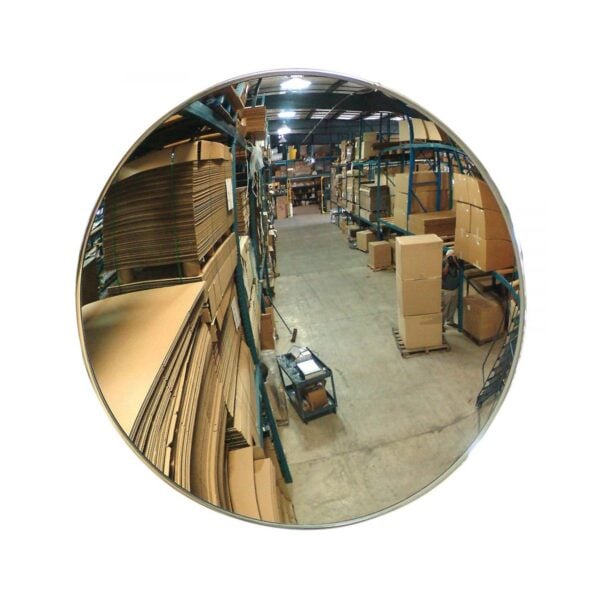
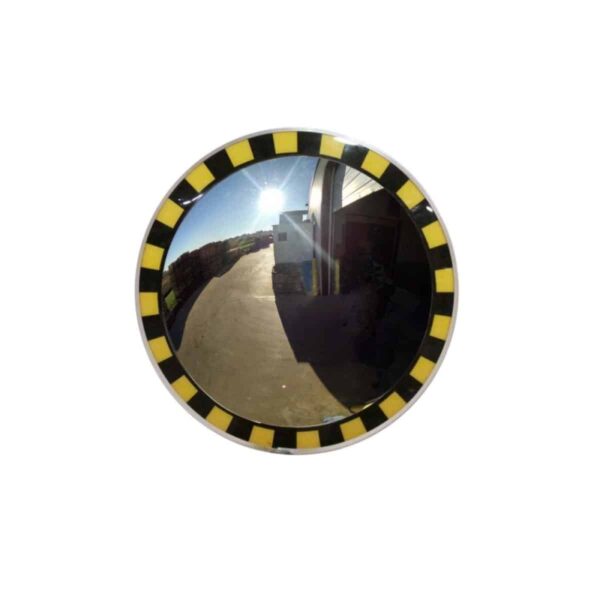
Convex mounting guide
How to choose between Z-brackets and telescoping brackets for your wall, post, or pole.
Wide-angle blind-spot visibility
160°
convex field of view
12-48"
common diameters
Indoor + outdoor
installation options
USA
made with sizing support
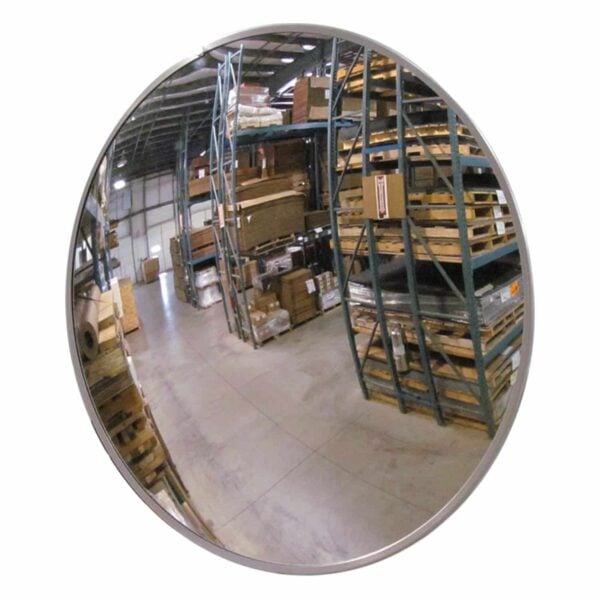
Start here for warehouse corners, retail aisles, office corridors, and general one-direction blind-spot visibility.
Use a rectangular convex mirror when low clearance, aisle shape, or a wider horizontal view matters more than a round footprint.
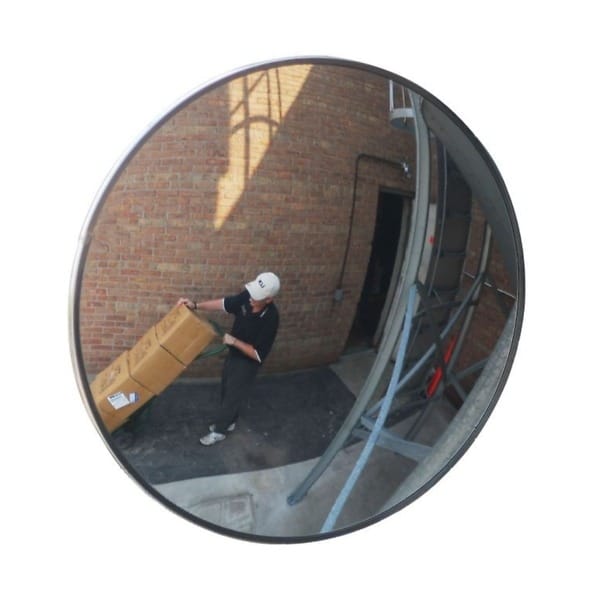
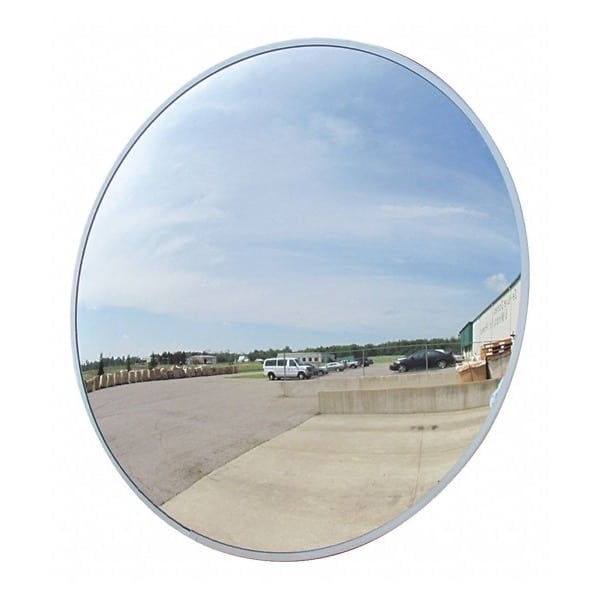
Outdoor blind exits, fence lines, parking lots, and building corners usually need traffic-rated backing and telescoping mounts.
If the mirror size is clear but placement is not, compare Z-brackets, single-arm, double-arm, and triple-arm telescoping mounts.
Identify whether the mirror is for a warehouse corner, a blind driveway exit, a retail observation area, or a traffic route.
Acrylic is often the clearest and most economical option, while polycarbonate is a stronger fit where impact resistance matters more.
Hardboard and lighter options work well indoors, while plastic-backed and stainless assemblies are better suited to wind, moisture, and outdoor use.
Mirror size and bracket style affect the field of view and how well the mirror performs on a wall, post, corner, or telescoping mount.
Monitor aisles, cashier lanes, and customer blind spots with broad-angle indoor visibility.
Improve sightlines around fences, building corners, lot exits, and cross-traffic routes.
Reduce aisle-corner collisions and improve movement awareness for employees, forklifts, and carts.
Designed for under-vehicle and checkpoint inspection use cases that need targeted visual coverage.
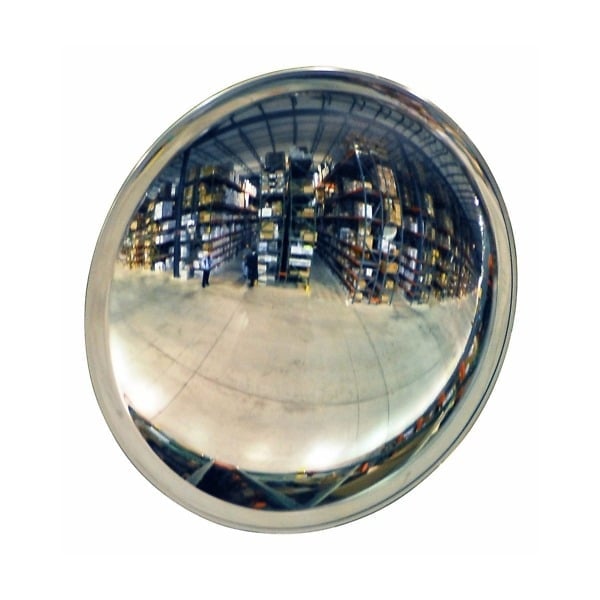
DomeVex side-by-side viewing comparison from National Safety Mirror.
Related guides
These links keep this category connected to the matching guide, adjacent mirror family, or installation help page instead of forcing a broad restart.
How to choose between Z-brackets and telescoping brackets for your wall, post, or pole.
Compare acrylic and polycarbonate before finalizing indoor vs outdoor convex builds.
Weather-rated mirrors for driveways, road approaches, and parking lot exits.
Buying guides and real-world installs from the convex mirror blog.
Mirrors by facility
Each page walks one kind of facility: the blind spots, the mirror for each one, the size to order, and how it mounts.
A convenience store needs two kinds of mirror: a dome mirror or DomeVex wide-view mirror mounted where the clerk can see the whole sales floor from the register, and smaller convex mirror…
Office buildings have the same blind corners as any other building, plus a lot of people carrying coffee and looking at their phones.
Hospital corridors are where beds, meal carts, wheelchairs, and staff in a hurry meet at right angles with no line of sight.
The manufacturer's school brochure names three places a mirror belongs: hallways, entrance and exit areas, and classrooms.
9 products
showing all results
No products match these filters.
Try removing a filter or browse all products in this category.
Clear filtersFree sizing help
Send us a photo and an American-based specialist can usually recommend the exact model, size, and mount for your space — free, with no obligation.
Replace damaged forklift mirrors and add convex visibility at turnarounds, dock approaches, and aisle intersections where lift operators need an earlier view of pedestrians and carts.
Small convex security mirrors help staff and visitors see around elevator lobbies, vestibules, and blind hallway corners without adding a bulky surveillance dome.
Compact convex mirrors improve awareness at cubicle rows, reception counters, and office corridors where people step into shared paths from short sightlines.
Use small acrylic convex mirrors for cashier lanes, ATM corners, equipment rooms, and short indoor approaches where a full traffic mirror would be oversized.
Sizing rule of thumb
Apply the 1:1.5 rule as a starting point — every 1 inch of mirror diameter covers roughly 1.5 feet of optimal viewing distance. Then confirm against environment, mounting height, vehicle speed, and the specific blind spot you need to eliminate.
| Mirror diameter | Optimal viewing distance | Best for |
|---|---|---|
| 12"–18" (Small) | Up to 18–27 ft | Cubicles, office corners, narrow aisles, short driveways, ATM and cashier supervision |
| 20"–28" (Medium) | 27–42 ft | Retail floors, standard warehouse aisles, parking-lot turns, building exits, intersections inside a facility |
| 30"–36" (Large) | 45–54 ft | Loading docks, wide intersections, parking lots, school drop-off lanes, large warehouses |
| 36"–48" (Extra Large) | 54+ ft | Public road intersections, long industrial sightlines, distribution centers, fleet yards |
Sizing is a starting point. Mounting height, vehicle speed, lighting, weather exposure, and obstructions can all shift the recommendation by one size in either direction.
Lens material
Approximately 17× the impact strength of glass
Approximately 250× the impact strength of glass
Environment
Aisles, hallways, retail floors, supervised blind spots
Driveways, building corners, parking, loading, traffic
Mounting
Short, fixed standoff for indoor and small mirrors
Adjustable standoff for medium, large, and outdoor mirrors
Great for aisles, hallways, and supervised indoor blind spots where weather exposure is not a concern.
Built for vehicle routes, building corners, loading areas, and driveway exits where durability matters.
A common fit where coverage shape matters as much as viewing angle and installation footprint.
Warehouse and distribution centers are the single most common use case for convex safety mirrors. Convex mirrors at aisle intersections, dock approaches, and forklift turnarounds reduce blind-corner collisions between pedestrians, lift operators, and cart traffic. The 30"-36" diameter range covers most warehouse intersections, but tight aisle layouts often work better with two 24" mirrors at adjacent corners than one larger mirror at a single point.
Retail security mirrors extend a single staff member's line of sight across cashier lanes, end-cap displays, and stockroom doors. Indoor 18"-24" acrylic mirrors are the usual choice here. For loss-prevention applications, dome mirrors are usually a better fit at high-traffic intersections, but convex mirrors still cover specific problem areas such as fitting-room corridors, ATM corners, and returns counters.
Driveway and traffic safety is where polycarbonate convex traffic mirrors mounted on telescoping brackets pay off. A 30"-36" outdoor convex mirror at a blind driveway exit gives drivers about 45 feet of usable visibility into oncoming traffic. The mounting angle matters as much as the diameter, so review convex mirror mounting before ordering.
Vehicle inspection and security checkpoints use specialized vehicle inspection mirrors rather than general-purpose convex mirrors. If you are building out an inspection point, start with the inspection mirror category because the form factor, handle, lighting, and mobility requirements are different.
Compare clarity, weight, scratch resistance, and price. Acrylic is ~17× glass strength; polycarbonate is ~250×.
Hardboard for indoor, HDPE plastic for general outdoor, galvanized steel for extreme weather and high-wind installs.
Z-bracket vs telescoping, mount height + tilt angle, pole mounting, and arm-count selection by mirror size.
Side-by-side comparison of coverage, mounting, and use cases. Pick the right format for your traffic pattern.
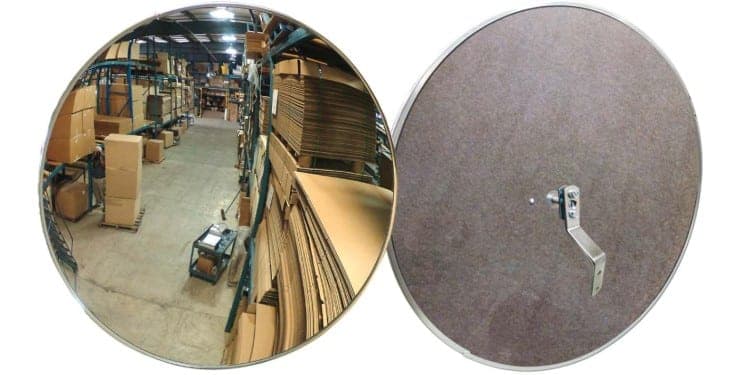
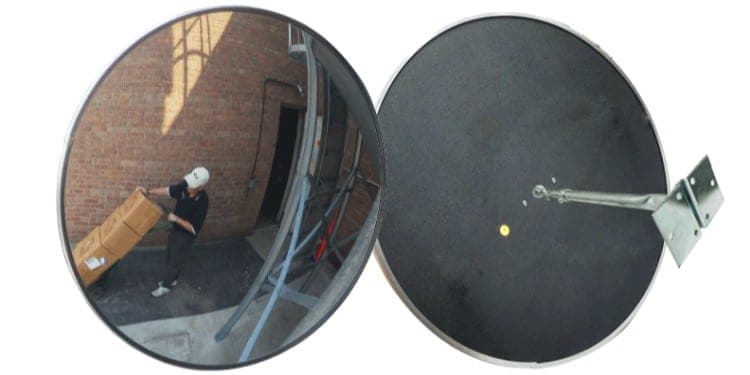
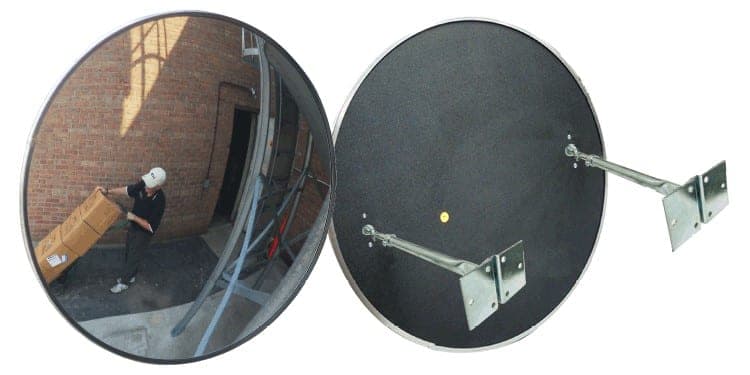
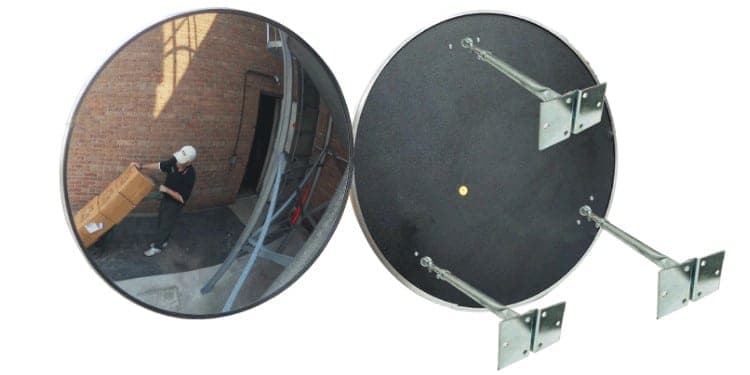
Lightweight and cost-effective for indoor installations. Hardboard is the standard backing for warehouses, hallways, retail stores, and other dry, climate-controlled spaces.
High-density polyethylene resists moisture, UV exposure, and temperature swings. HDPE is the right choice for outdoor mirrors, loading docks, driveways, and any unheated or damp environment.
The heaviest and most durable backing option. Galvanized steel is corrosion-resistant and built for high-traffic industrial environments — factories, parking garages, and loading zones where impact risk is highest.
Frequently asked