Acrylic vs Polycarbonate Safety Mirror Lens
Published July 27, 2026 - Last updated July 27, 2026
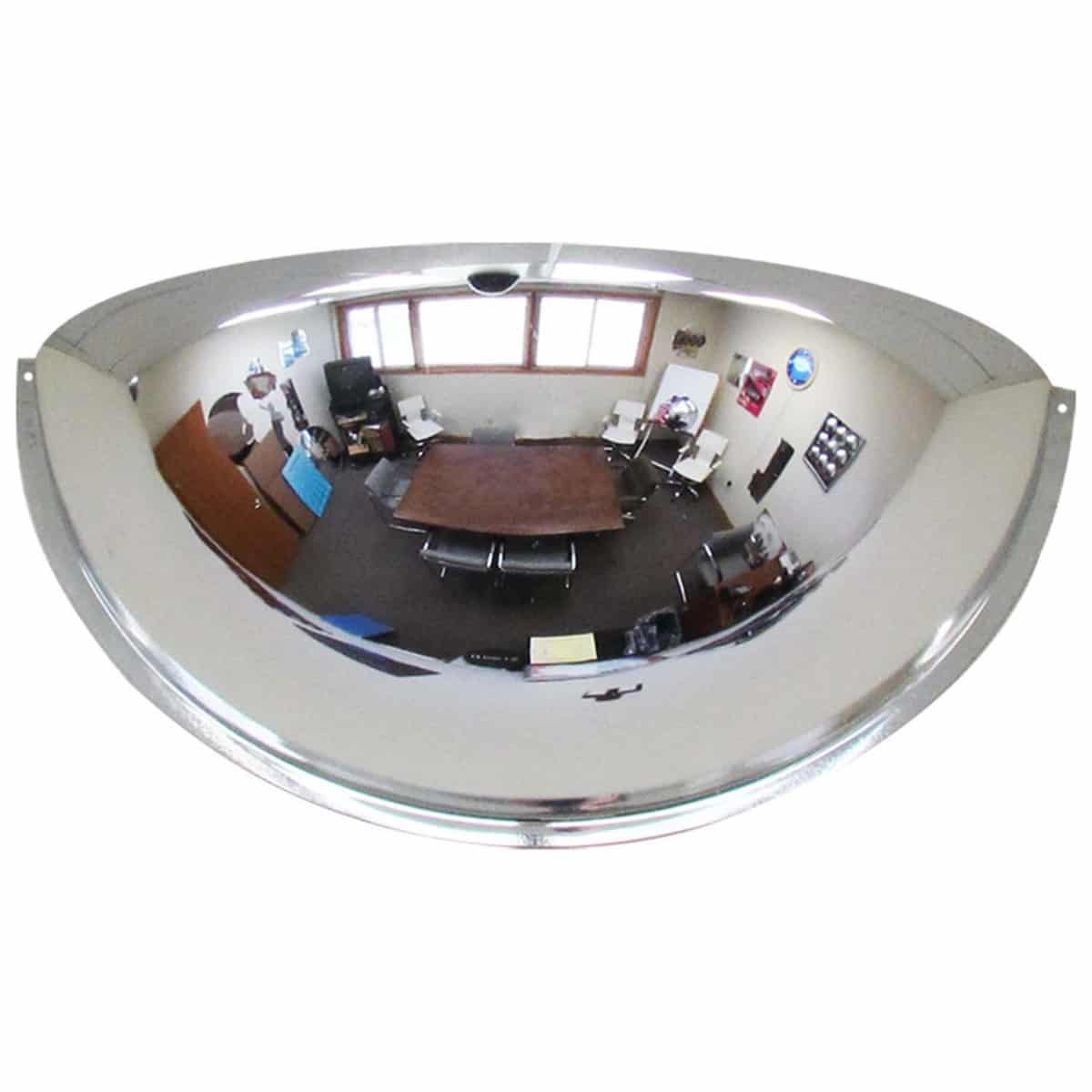
The lens material decides three things: how clear the mirror image is, how much impact the mirror can take, and how long the mirror will last in your environment. Acrylic is the everyday choice; polycarbonate is the better call anywhere impact is realistic. Here’s how to choose the right one in under five minutes.
The 30-second rule
- Indoor, supervised, low-impact: Acrylic. Cheaper, clearer, lighter.
- Outdoor, traffic, schools, jails, anywhere impact is realistic: Polycarbonate. About 15× more impact-resistant than acrylic.
- Don’t know yet: If you’d be upset to replace the mirror after a single accident, choose polycarbonate.
Side-by-side comparison
| Decision factor | Acrylic lens | Polycarbonate lens |
|---|---|---|
| Impact strength vs glass | ~17× | ~250× |
| Optical clarity | Excellent — closest to glass | Very good — slightly softer surface |
| Weight | Lighter | Heavier — verify bracket sizing |
| Scratch resistance | Better than polycarbonate | Softer surface; more prone to scuffs |
| UV / outdoor longevity | Good with HDPE backing | Excellent — UV-stabilized for outdoor use |
| Price | Most economical | 15–35% more than equivalent acrylic |
| Best for | Retail, offices, hospitals, indoor warehouses | Outdoor traffic, schools, jails, vandalism-risk areas |
When acrylic is the right choice
Acrylic lenses are the standard choice for indoor safety mirrors. The optical clarity is excellent — close enough to glass that the difference is invisible to a customer or employee using the mirror. The surface hardness is better than polycarbonate, so day-to-day wear leaves fewer marks. It is also the lowest-cost common mirror material.
For retail floors, offices, hospitals, supervised hallways, indoor warehouse aisles, and ATM corners, acrylic is almost always the right pick. Pair it with hardboard backing for indoor use or HDPE backing if there’s any chance of light outdoor exposure (sheltered building corners, covered loading areas).
The one thing acrylic isn’t the right pick for is impact. If a forklift, baseball, shopping cart, or vandal could strike the mirror, the math changes — and that’s where polycarbonate earns the higher price.
When polycarbonate is the right choice
Polycarbonate is approximately 250 times the impact strength of glass — about 15 times stronger than acrylic. That difference is most relevant in environments where impact is realistic: outdoor traffic intersections, school zones, fleet yards, jails and prisons, vandalism-prone public spaces, and warehouses with active forklift traffic.
The everyday cost of polycarbonate is 15–35% more than the equivalent acrylic mirror. The lifetime cost is usually lower because a single replacement event in a high-impact environment costs more than the original upgrade. A 30" polycarbonate convex mirror at a school crosswalk that survives a single thrown object has already paid for itself.
Polycarbonate’s only real downside is surface softness — it scratches more easily than acrylic. That’s rarely a problem in practice because most polycarbonate installations are mounted out of arm’s reach. For installations where pedestrians can directly touch the mirror surface, factor scratch resistance into the decision.
Putting it together: which lens for which mirror?
- Indoor convex mirrors: Acrylic. Pair with hardboard backing on a Z-bracket or short telescoping mount.
- Outdoor convex mirrors (residential, sheltered commercial): Acrylic with HDPE backing on a single-arm telescoping bracket.
- Outdoor convex mirrors (public road, school, fleet, exposed): Polycarbonate with galvanized steel backing on a double or triple-arm telescoping bracket.
- Indoor dome mirrors (retail, office, hospital): Acrylic. The clarity advantage matters at ceiling-mount height.
- Indoor dome mirrors (warehouse, school, jail): Polycarbonate. Forklift impact and rough handling justify the upgrade.
- Vehicle inspection mirrors: Polycarbonate. Inspection mirrors take physical handling — the impact rating is the safer baseline.
Frequently asked questions
Which is stronger — acrylic or polycarbonate?
Polycarbonate is significantly stronger. Acrylic is approximately 17 times the impact strength of glass; polycarbonate is approximately 250 times the impact strength of glass. For environments where impact, vandalism, or vehicle strikes are realistic risks, polycarbonate is the safer choice.
Is acrylic clearer than polycarbonate?
Acrylic has slightly better optical clarity — its surface is harder than polycarbonate's, which keeps the mirror image crisp longer. Polycarbonate is still very good, but it's softer on the surface and can scuff with rough handling. For low-impact indoor installs where clarity matters most, acrylic is the right call.
Which lens material is better for outdoor traffic mirrors?
Polycarbonate. Outdoor traffic mirrors deal with weather, UV, debris, and occasional impact. Polycarbonate's 250× impact strength rating makes it the safer pick for driveway exits, public-road intersections, school zones, and any installation where vehicles or projectiles could strike the mirror.
How much more does polycarbonate cost?
Polycarbonate typically costs 15-35% more than the equivalent acrylic mirror, depending on size and configuration. The lifetime cost is usually lower in high-impact environments because replacing one broken acrylic mirror can cost more than the upgrade.
Can I use acrylic outdoors?
Yes, acrylic with HDPE backing handles light outdoor duty — sheltered residential driveways, light commercial corners, areas where impact risk is low. For exposed outdoor installations near roads, schools, or any space with vehicle or vandalism risk, polycarbonate is the right choice.
Will polycarbonate yellow over time?
Modern polycarbonate convex and dome mirrors include UV-stabilization additives and resist yellowing for many years of outdoor use. Older or low-grade polycarbonate can yellow under prolonged UV exposure, but mirrors built for safety and traffic applications are spec'd for outdoor longevity.
Material And Safety Sources
These references support the material-selection guidance above. Product-specific lens formulations, coatings, and backing combinations can vary by SKU.
- Curbell Plastics - Polycarbonate material properties — Documents polycarbonate impact resistance, strength, optical properties, and use in protective glazing and vandalism-resistant applications.
- Curbell Plastics - Acrylic material properties — Documents acrylic's glass-like optical qualities, lighter weight, weathering properties, and higher impact resistance than glass.
- OSHA - Powered industrial truck traveling and maneuvering guidance — Used for warehouse and forklift visibility context where lighting changes and vehicle movement can create collision risk.
Ready to pick the right mirror?
Tell NSM the environment, the obstruction, and the viewing distance. We’ll recommend the right lens material, backing, and bracket combination — and quote bulk orders the same business day.
Related resources
Keep moving through the right support pages
Use the connected NSM policy and help pages below instead of backing out to search again.
Browse convex mirrors
See lens choices across the core convex mirror family.
Choose the backing type
Match hardboard, HDPE, or galvanized steel backing to the environment.
Review mounting options
Bracket and mounting guidance before choosing the final hardware.